The Human Cost of the Pursuit of Perfection
What happens when children are taught that obedience, body size and medals matter more than their own well-being?
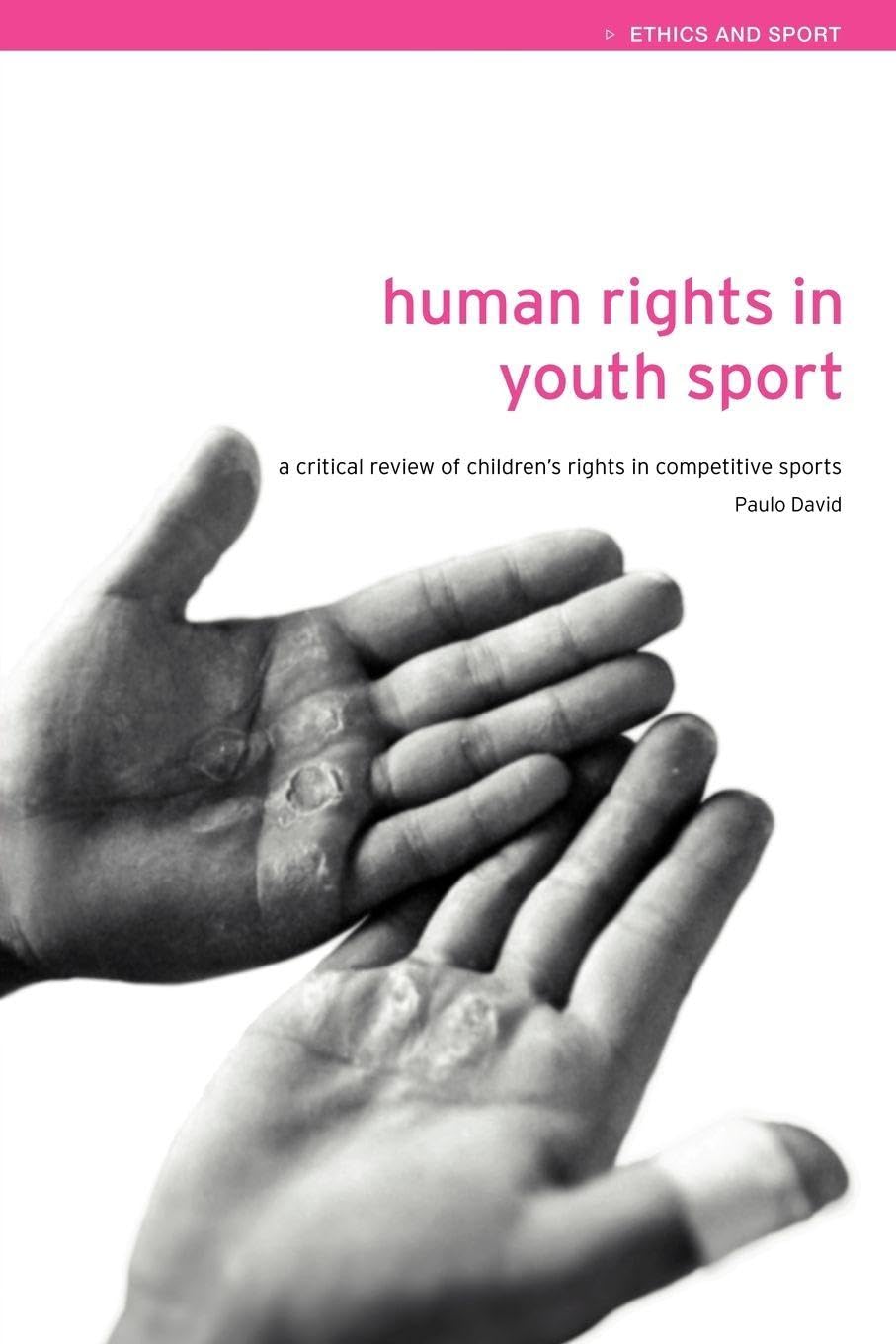
Part 2 of a 4 part series based on Human Rights in Youth Sport by Paulo David
When coaching becomes control
Elite youth gymnastics can operate as a highly controlled environment in which coaches exercise extensive power over children’s daily lives, training, performance opportunities and future prospects.
When young athletes are isolated from ordinary sources of support and have little influence over decisions affecting them, this imbalance can leave them vulnerable to emotional abuse, verbal humiliation and the erosion of their autonomy. Behaviour that would be recognised as abusive in other settings may instead be presented as discipline or as a necessary part of producing champions.
Statements attributed to prominent elite coaches illustrate the authoritarian attitudes that have been associated with the sport.
Irina Viner, head coach of the Russian national team, described her relationship with young gymnasts in explicitly hierarchical terms:
“My relation to the young girls is like master-slave until 14, then it looks like general-soldiers until 16, after that we enter in a partnership.”
Béla Károlyi, who coached Romanian and US Olympic teams, used a similarly uncompromising analogy:
“These girls are like little scorpions. You put them all in a bottle, and one scorpion will come out alive. That scorpion will be the champion… The young ones are the greatest little suckers in the world. They will follow you no matter what.”
These statements describe a conception of coaching in which young athletes are expected to submit to adult authority and compete in an environment where only the strongest survive.
The problem is not simply that individual coaches may hold authoritarian views. It is what happens when those views are reinforced by a system in which coaches control training, selection and future opportunities, while children have little power to challenge them.
The difference between success and well-being
The experiences described by gymnasts expose the human cost of this culture.
Shannon Miller, a 1992 Olympic medallist and 1994 world champion, recalled:
“We don’t enjoy training. The only pleasure is the results, the medals.”
Former elite US gymnast Danielle Herbst described the pressure she experienced from her coach:
“My coach’s desire to win seemed stronger than mine at times… In time of pressure, which not a day passed without… I was yelled at, screamed at, and had things thrown at me… Somehow my coach had convinced himself, and constantly reminded me, that I was a fat imbecile, a bloody idiot, no good and worthless.”
A 14-year-old Finnish gymnast, Maarit, reportedly described quitting gymnastics as “the happiest day of my life”.
These accounts challenge the assumption that sporting achievement necessarily reflects a positive experience. A gymnast may win medals and achieve international recognition while living with fear, humiliation and psychological distress.
When the pursuit of results becomes the dominant measure of success, a child’s enjoyment, dignity and emotional health can become secondary considerations. The athlete is valued for what they produce rather than supported as a developing person.
Body shaming as a tool of control
Body shaming is a particularly damaging expression of this power imbalance. It turns an ordinary aspect of a child’s physical development into a source of shame and makes acceptance conditional on conforming to adult expectations.
Former elite US gymnast Kristie Phillips recalled the humiliation she experienced despite weighing only 45 kilograms:
“I weighed 45 kilograms and I was being called [by my coach] an overstuffed Christmas turkey.”
Such treatment reinforces the message that a gymnast’s body belongs to the sporting system and must conform to the demands of coaches.
Accounts from former elite gymnasts describe practices including dedicated “fat rooms”, public weigh-ins, humiliation over weight and the deliberate restriction of food and water during training. Former elite gymnast Tonya Chaplin documented practices in which coaches confined athletes to “fat rooms” and denied meals to girls labelled as “fatties”.
These practices go far beyond fitness assessment or appropriate nutritional support. They use shame, deprivation and social exclusion to enforce compliance.
They also undermine a child’s sense of autonomy. Young gymnasts may learn that their value depends on their appearance, that adults have the right to control their bodies and that challenging mistreatment risks losing their place in the sport.
From weight control to eating disorders
The pressure to remain small and light can have serious consequences for young gymnasts’ physical and psychological health. Where adults impose restrictive diets, monitor weight obsessively or use humiliation to enforce a particular body shape, weight management becomes a form of coercion rather than health-focused support.
In elite aesthetic sports, including gymnastics, diving and figure skating, reported rates of clinical anorexia and bulimia range from 15% to 62%, compared with estimated rates of 0.5% to 3% among young females in the general population.
These pressures can contribute to the female athlete triad, a syndrome involving three interconnected areas: disordered eating or inadequate energy availability, menstrual dysfunction and impaired bone health.
| Component | Physiological mechanism | Potential consequences |
|---|---|---|
| 1. Disordered eating and imposed starvation | Severe calorie restriction, including intakes below 1,000 kcal per day, fluid restriction, purging and misuse of diuretics or laxatives. | Loss of essential body fat, reduced metabolic function and chronic fatigue. |
| 2. Amenorrhoea and hormonal suppression | Low energy availability disrupts the hypothalamic-pituitary-ovarian axis and normal hormonal regulation. | Delayed menarche and secondary amenorrhoea, reported at rates of 3%–66%, compared with 2%–5% in the general population. |
| 3. Osteoporosis and premature bone loss | Oestrogen deficiency combined with inadequate nutrition interferes with the acquisition of peak bone mass. | Reduced bone mineral density, deterioration in bone structure and recurrent stress fractures. |
These effects are particularly concerning in children and adolescents, whose bodies need sufficient energy and nutrients to support both intensive training and normal development.
The consequences of extreme weight pressure are illustrated by the case of US gymnast Christy Henrich. After missing selection for the 1988 Olympic team by 0.118 points—a margin associated with coach-led criticism demanding that she lose weight—Henrich developed severe anorexia nervosa. She died in 1993 from multiple organ failure resulting from prolonged starvation, weighing less than 30 kilograms at the time of her death.
Her experience illustrates the potential consequences of a sporting environment in which weight becomes a defining measure of an athlete’s worth and prospects.
Other gymnasts have described similarly severe restrictions. Before the 1992 Barcelona Olympics, 16-year-old American gymnast Betty Okino was reportedly restricted to fewer than 1,000 calories a day while undertaking intensive training.
Compulsory weigh-ins and arbitrary weight targets can also create incentives for dangerous methods of weight control. Reports describe young gymnasts using diuretics and laxatives to manipulate body fluids and waste in order to meet targets set by adult coaches.
These practices expose children to potentially serious medical complications while undermining their ability to recognise and respond to their own nutritional needs.
A system that turns harm into discipline
The problem is not simply that some gymnasts develop eating disorders or experience psychological abuse. It is that the culture surrounding them may encourage behaviours that place their health at risk, while presenting those behaviours as necessary for success.
When adults control food, weight and training, young athletes can find themselves trapped between the demands of the sport and the basic requirements of their developing bodies.
The combination of authoritarian coaching, public humiliation, restrictive eating and pressure to continue despite pain can create an environment in which children learn to distrust their own needs. They may be afraid to disclose injury, challenge a coach or admit that training is harming them.
The physical and psychological commodification of young athletes also serves the financial, professional and status ambitions of adults. A child’s body becomes something to be managed for competitive advantage, rather than part of a person whose dignity and well-being must be protected.
A safeguarding system cannot judge a coach solely by the results their athletes achieve. It must examine how those results are produced, whether children are treated with dignity and whether they can question or leave an abusive environment without fear.
The pursuit of sporting excellence cannot justify the destruction of a child’s sense of self, relationship with their body or right to feel safe.
In Part 3, we look beyond individual coaching relationships to the wider incentives that allow exploitation to persist: money, adult ambition, institutional prestige and the treatment of young athletes as valuable assets.
Human Rights in Youth Sport Series
Part 2: The Human Cost of the Pursuit of Perfection — shows what the system can mean for individual children.