When Children Become Assets: Exploitation in Competitive Gymnastics
Why the mistreatment of young gymnasts cannot be understood simply as a problem of individual coaches behaving badly.
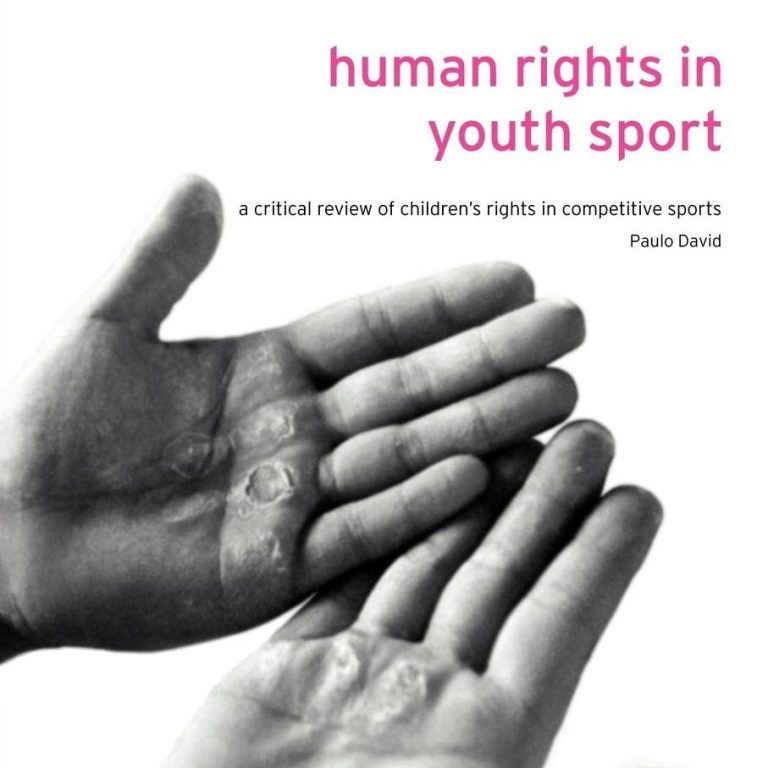
Part 3 of a 4 part series based on Human Rights in Youth Sport by Paulo David
Who benefits from a child’s success?
The exploitation of young gymnasts cannot be understood solely in terms of training practices or individual coaching relationships. It is also shaped by the financial, political and professional interests surrounding elite sport.
As gymnastics has developed into part of a multibillion-dollar international sports industry, young athletes have increasingly become valuable assets. Their performances can generate sponsorship income, prize money, funding and institutional prestige. These rewards create incentives to prioritise competitive success over the welfare of the children whose achievements produce them.
The danger arises when a child’s interests become subordinate to those of the adults and institutions invested in their success.
This dynamic is particularly concerning because children depend on adults for protection, yet those same adults may have financial, professional or reputational interests in keeping them training and competing.
Achievement by proxy: When adult ambitions take over
The concept of achievement by proxy, discussed by Tofler and colleagues in a 1996 article in the New England Journal of Medicine, helps explain how adults can project their own ambitions onto young athletes.
Parents and coaches may pursue status, financial rewards or personal fulfilment through a child’s sporting achievements. The prospect of vicarious glory, lucrative commercial sponsorships or institutional prestige can encourage adults to tolerate—and sometimes actively promote—high-risk, abusive training environments.
The desire to support a talented child is not inherently harmful. The problem arises when adult ambitions override the child’s own wishes, needs and rights. In its extreme form, Tofler and colleagues identify achievement by proxy as a distinct form of child abuse.
This is not simply a matter of parents pushing too hard or coaches becoming over-invested in winning. It is a question of what happens when adults’ emotional, financial and professional interests become entangled with a child’s performance.
The resulting incentives can reinforce one another:
- Commercialisation and political prestige: Sporting success can generate financial rewards and institutional recognition, encouraging early victories and turning young gymnasts into valuable assets before they reach adulthood.
- Achievement by proxy: Parents, coaches and other adults may project their own ambitions onto young athletes, placing pressure on children to meet expectations that are not necessarily their own.
- Financial exploitation: Young athletes may generate substantial prize money and sponsorship income without having meaningful control over their earnings.
- Enforced compliance: Where psychological pressure fails, adults may resort to physical force and corporal punishment to maintain control.
These are not necessarily separate problems. They can form part of a system in which the child’s value is measured by what they can deliver and the adults around them have much to lose if performance declines.
When a child’s earnings are not their own
Young athletes may generate substantial income while having little control over how that money is managed. Their age and dependence on adults can leave them particularly vulnerable when those responsible for their welfare also control their careers and finances.
Dominique Moceanu’s experience illustrates the risks. At 17, the 1996 Olympic gold medallist pursued a high-profile legal case against her parents to secure legal emancipation after discovering that her gymnastics earnings—estimated at nearly $4 million—had been completely dissipated without her consent to construct a private gym facility.
Her case highlights the vulnerability of young athletes whose financial interests are controlled by adults, including those expected to protect them.
The issue extends beyond any individual family dispute. Children who generate income through sport may lack the legal knowledge, practical independence and bargaining power needed to protect their earnings. Their success can benefit adults and institutions long before they are able to exercise meaningful control over their own lives.
This is one reason child protection cannot stop at the gym door. It must also consider the financial relationships, contractual arrangements and power structures surrounding young athletes.
When psychological coercion becomes physical violence
Where psychological pressure fails to secure compliance, some training environments have resorted to physical violence and severe corporal punishment.
In 1995, 11-year-old Romanian gymnast Adriana Giurca died following a severe beating by her trainer, Florin Gheorghe, after she failed to execute a routine movement correctly. Gheorghe was subsequently convicted of manslaughter.
Other evidence demonstrates the extent to which adults have used physical force to impose training demands. French television broadcasts in 1996 captured footage of coaches sitting directly on the lower backs of six- and seven-year-old children to force their limbs into extreme positions, ignoring the children’s visible distress.
These examples reveal the most extreme consequences of a system in which adult authority is allowed to override a child’s physical autonomy.
They also expose the inadequacy of treating abuse as a series of isolated incidents. When a sport places children in highly controlled environments, rewards adults for producing successful athletes and leaves those adults with considerable power over selection and opportunity, the conditions exist for harmful practices to persist.
The problem is not that every coach or parent behaves abusively. It is that the system must be able to identify and stop abuse even when the adult responsible is successful, respected or institutionally influential.
Why parents cannot be the only safeguard
Parents have an essential role in protecting their children, but they cannot be expected to provide the only effective safeguard against these pressures.
They may lack access to information about what happens during training. They may trust the authority of a coach or believe that demanding practices are necessary for success. They may fear that challenging a club will jeopardise their child’s selection, training opportunities or future prospects.
Some parents may also become caught up in the culture of achievement themselves, investing so much time, money and emotional energy in a child’s sporting pathway that it becomes difficult to recognise when the pursuit of success is causing harm.
These realities do not remove parental responsibility. They demonstrate why protection must extend beyond the family and depend on independent oversight, clear standards and meaningful accountability.
A system cannot rely on children to challenge powerful adults, or on parents to risk their child’s future in order to expose mistreatment. Nor can it depend on sporting organisations voluntarily investigating themselves when their own practices or reputations are at stake.
From individual misconduct to institutional responsibility
The financial, professional and reputational incentives surrounding elite gymnastics can reinforce authoritarian coaching and the exploitation of young athletes. The more valuable an athlete’s success becomes, the greater the potential pressure to maintain performance—even when doing so conflicts with the child’s welfare.
This is why the response must go beyond asking individual coaches to behave better or encouraging parents to speak up. It requires structures that prevent conflicts of interest, make reporting safe, ensure complaints are investigated independently and impose meaningful consequences when children are harmed.
Sporting bodies must not be the final arbiters of whether their own conduct meets the standards required to protect children. Their responsibilities must be enforceable, and their decisions must be open to appropriate external scrutiny.
The central question is not merely whether elite gymnastics produces champions. It is whether the system that produces them protects the children on whom it depends.
Dismantling exploitative and authoritarian practices requires a different foundation: one that treats children as rights-holders rather than assets, and makes their welfare a binding responsibility rather than a voluntary aspiration.
In Part 4, we set out what that change would require, using the UN Convention on the Rights of the Child as the foundation for a rights-based system of training, governance and accountability.
Human Rights in Youth Sport Series
Part 3: When Children Become Assets — examines the adult interests and institutional incentives that can allow exploitation to persist.